Learn more about cervical disc herniation from spine surgeon Dr. Jacob Buchowski.
Showing posts with label spine doctor. Show all posts
Showing posts with label spine doctor. Show all posts
Thursday, February 28, 2013
Cervical Disc Herniation
Learn more about cervical disc herniation from spine surgeon Dr. Jacob Buchowski.

Saturday, June 23, 2012
Thursday, June 21, 2012
Spine Disorders Complicate Hip Arthroplasty
Patients undergoing total hip arthroplasty (THA) who have coexistent lumbar spine disorders (LSDs) do not report as much improvement in pain and function after arthroplasty compared with patients without lumbar disorders.

Heidi Prather, D.O., from the Washington University School of Medicine in St. Louis, and colleagues retrospectively examined 3,206 patients who underwent THA from 1996 to 2008. To identify which patients were also evaluated by a spine specialist, the International Classification of Diseases, Ninth Revision billing codes for LSDs were cross-referenced with patients who had undergone a THA. Functional outcomes were measured using the modified Harris Hip Score (mHHS) and University of California Los Angeles (UCLA) hip questionnaire, and physician medical charges were assessed.
The researchers found that a higher number of LSD patients were significantly older (64.5 years) compared with patients treated with THA alone (58.5 years). Compared with the THA + LSD group, patients in the THA alone group had significantly greater improvement in the mHHS, UCLA score, and pain. On average, patients in the THA + LSD group incurred significantly more in charges per episode of care ($2,668) and significantly more days per episode of care, compared to patients with THA alone.
"Patients undergoing THA alone had greater improvement in function and pain relief with fewer medical charges as compared with patients undergoing a THA and treatment for an LSD," the authors write.
Read the original article in MD News here:
MD News - Coexistent Lumbar Disorders Complicate Hip Arthroplasty
Wednesday, June 20, 2012
Spinal Tumor Recovery
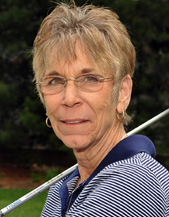 Mary Martinez is back to bowling and golfing and is “doing fantastic,” though she says she’s under doctor’s orders not to lift refrigerators or break up concrete. Just one year ago, the 60-year-old Martinez was treated for lung cancer that had metastasized to her spine, and Jacob Buchowski, MD, MS, had to implant two artificial vertebrae to replace those that had been consumed by cancer.
 Martinez, whose nickname at Barnes-Jewish Hospital was “the sledgehammer lady,” first learned that something was wrong when her back made an audible “pop” while she was wielding a sledgehammer to break up an old walk around her swimming pool. Excruciating pain below her shoulder blade radiated down her arm and made her left side ineffective.
Based on the advice of her chiropractor, Martinez underwent an MRI when X-rays were negative and three weeks of chiropractic treatment did nothing to relieve the pain. The scans revealed a lesion on her lung, which Martinez, a long-time smoker, says matter-of-factly didn’t surprise her. It took exploratory surgery to find the cancer’s metastasis to the spine.
Eventually, Martinez was referred to a Siteman Cancer Center oncologist, but the disease was unresponsive to chemotherapy, and surgery on both her lungs and her spine was scheduled for St. Patrick’s Day of ’08.
In a complex, day-long surgery, Buchowski and colleagues removed the entire tumor which originated in the lung and invaded two thoracic vertebrae. The extent of tumor involvement made it necessary to reconstruct the spine with a metal cage, screws, and rods.
Although the need for radiation prior to surgery made wound healing difficult and Buchowski had to schedule plastic surgery by a colleague, the problem was completely resolved. Martinez, a former Illinois special education teacher, says now that she is “not quite the Energizer Bunny,” but is grateful to be active again and lucky that the sledgehammer incident introduced her to Buchowski.
“I did my research on the Internet, and he was the right man for the job. He always made me feel very secure, and always told me the truth, including that my surgery would last about 10 hours. I’m very thankful that Dr. Buchowski could help me.”
Friday, June 8, 2012
Washington University Orthopedics - Spine Center
The Spine Center, conveniently located at our Orthopedic Outpatient Center in Chesterfield, provides comprehensive, specialized care to patients with acute back pain and neck pain. We are committed to seeing patients as soon as possible, and in most cases, appointments are given within 48 hours of your initial phone call.
76 percent of Americans suffer from acute back pain at some time during their lives. The focus of our center is to see patients early in the development of their symptoms and to provide a specific diagnosis and treatment plan. In addition to individualized treatment plans, rehabilitation also includes education regarding body mechanics specific to a patient’s lifestyle.
Thursday, June 7, 2012
Back Pain Prevention Tips
Many of us suffer from back pain on a day-to-day basis. An estimated 60 to 90 percent of Americans experience at least one back injury during their lifetime. Of these people, half will experience recurring episodes of back pain. Most back problems develop over a span of years as a result of different factors - your exercise, how you sleep or sit and your diet. Here are a couple of helpful tips that may help prevent back pain:
- Exercise to keep your back strong. Aerobic conditioning and strength training can stem off lower back pain.
- Make an effort to sit and stand upright. Sitting or standing, you should put forth effort to keep good posture. To do this, try to ensure that your ears, shoulders and hips are aligned.
- Protect your back while sleeping. If you sleep on your side, sleep with a pillow in between your knees. If you sleep on your back, try to put a pillow underneath your lower back. Ensure your mattress also has proper support.
- Eat a healthy diet. Try to consume foods with vitamin D (found mostly in fish and soy products) and calcium, which helps to prevent osteoporosis.
Wednesday, June 6, 2012
Thursday, February 9, 2012
Dr. Larry Lenke Discusses Frequently Asked Questions About Scoliosis
Why
does scoliosis develop most often in late childhood? And why is it more common
in girls?
Scoliosis
most often develops in late childhood because of the association between growth
and progressive scoliosis curves. Although scoliosis can develop at any age,
including infantile (age birth- 3), Juvenile (age 3-10), adolescent (age 10-18)
and adult (> age 18), the most common time to detect curves are in late
childhood/early teen years. Thus, the most common form seen, Adolescent
Idiopathic Scoliosis (AIS), is detected between ages 10 and 18, often just
before or after puberty and the associated adolescent growth spurt. Small
curves (10-20 degrees) are nearly equally found in boys and girls, but larger
curves which often need treatment (those > 40 degrees) are seen in females
to males in a 9:1 ratio. It is a bit unclear why that is the case, it may
certainly be a genetic tendency, and/or something relating to hormonal
alterations or connective tissue adaptations for the potential for childbirth
in females.
Subscribe to:
Posts (Atom)